Referral Programs That Actually Work - Implementation Guide
Learn how to build and optimize referral programs that drive growth. Complete guide with metrics, incentives, and automation strategies.
Referral programs are one of the most cost-effective growth channels. A well-designed referral program can reduce customer acquisition costs by up to 70% while bringing in higher-quality customers.
But most referral programs fail because they're poorly designed, hard to use, or offer weak incentives.
This guide will show you how to build a referral program that actually works — with real examples, metrics, and implementation strategies.
Why Referral Programs Work
The Psychology Behind Referrals
People trust recommendations from friends and family 92% more than any form of advertising.
Key principles:
- Social Proof: "My friend uses this, so it must be good"
- Reciprocity: Rewarding both referrer and referee creates a win-win
- Status: Some people enjoy being early adopters who share discoveries
- Self-Interest: Incentives motivate sharing
Business Benefits
For you:
- Lower customer acquisition cost (CAC)
- Higher customer lifetime value (LTV)
- Better retention rates
- Faster growth compounding
Statistics:
- Referred customers have a 37% higher retention rate
- Referral marketing generates 3-5x higher conversion rates than other channels
- 83% of satisfied customers are willing to refer, but only 29% actually do (incentives fix this)
Essential Elements of a Successful Referral Program
1. Simple, Clear Mechanics
Bad referral flow:
Sign up → Navigate to settings → Find referral tab → Copy link →
Manually share → Friend signs up → Email support to claim reward
Good referral flow:
Dashboard → Click "Invite Friends" → One-click share (email/social/link) →
Friend signs up → Automatic reward
Key principle: Reduce friction at every step.
2. Compelling Incentives
The incentive must be valuable enough to motivate action.
Common incentive structures:
A. Two-Sided Rewards (Both Get Something)
Best for: Most SaaS products and services
Referrer gets: $25 credit
Referee gets: $25 credit
Why it works: Creates alignment. The referee has an incentive to actually use the product.
Example: Dropbox
- Referrer gets 500MB extra storage
- Referee gets 500MB extra storage
- Result: 3900% growth in 15 months
B. Percentage Discounts
Best for: Subscription services
Referrer gets: 1 month free for each referral
Referee gets: 20% off first month
Example: LikeDo
- Referrer gets 50 credits
- Referee gets 25 credits
- Credits never expire (for paid users)
C. Cash Rewards
Best for: High-value products or B2B
Referrer gets: $100 cash per paid customer
Referee gets: Free trial + discount
Example: Some SaaS tools
- $500 for each enterprise customer referred
- Paid out after customer stays for 3 months
D. Tiered Rewards
Best for: Creating power users
1-5 referrals: $10 each
6-20 referrals: $15 each
21+ referrals: $25 each
Why it works: Gamification encourages users to refer more.
3. Easy Sharing Mechanisms
Provide multiple ways to share:
Must-haves:
- Unique referral link (e.g.,
like.do/ref/john) - One-click email invite
- Social media sharing (Twitter, LinkedIn, Facebook)
- Copy-to-clipboard button
Nice-to-haves:
- QR code for in-person sharing
- WhatsApp/Telegram direct sharing
- Pre-written message templates
- Embeddable referral widget
4. Transparent Tracking
Users must be able to see:
- How many people they've referred
- How many have signed up
- How many have converted (if required)
- Total rewards earned
- Pending vs. claimed rewards
Example dashboard:
Referrals Overview
━━━━━━━━━━━━━━━━━━
Total invites sent:     45
Sign-ups:              12
Qualified referrals:    8
Total rewards earned:  $200
Pending:               $50
5. Anti-Fraud Measures
Prevent abuse while keeping the program accessible:
Common fraud tactics:
- Self-referrals (referring yourself with different emails)
- Fake sign-ups that never convert
- Bot-generated referrals
Prevention strategies:
- Require email verification
- Require minimum activity level (e.g., create 3 links, upload 1 file)
- Delay reward until referee stays active for X days
- Limit referrals per day/week
- Block disposable email domains
- Track IP addresses and device fingerprints
LikeDo's approach:
referral: {
  enable: true,
  inviterReward: {
    credits: 50,
    expireDays: 365,
  },
  inviteeReward: {
    credits: 25,
    expireDays: 365,
  },
  maxInvitesPerDay: 20,
  requireEmailVerification: true,
}
Implementation Strategies
Step 1: Define Your Goal
What do you want?
- More sign-ups?
- More paid conversions?
- More active users?
- More social shares?
Example goals:
- "Increase paid conversions by 25% this quarter"
- "Acquire 1,000 new users through referrals"
- "Reduce CAC from $50 to $30"
Step 2: Choose Your Incentive
Consider:
- Your margins (can you afford the incentive?)
- Customer LTV (how much is a new customer worth?)
- What motivates your users (money? features? status?)
Formula:
Max referral reward = (Customer LTV × 0.3) - Cost of reward fulfillmentExample: If your customer LTV is $300 and fulfillment costs $10:
Max reward = ($300 × 0.3) - $10 = $80You can afford to give up to $80 in rewards per referral.
Step 3: Build the Technical Infrastructure
Required components:
A. Unique Referral Links
// Generate unique referral code
function generateReferralCode(userId) {
  const hash = crypto.createHash('md5')
    .update(userId + Date.now())
    .digest('hex');
  return hash.substring(0, 8);
}

// Create referral URL
const referralUrl = `https://like.do/ref/${referralCode}`;
B. Referral Tracking
// Track referral sign-up
async function trackReferral(referralCode, newUserId) {
  const referrer = await getUserByReferralCode(referralCode);

  if (!referrer) return;

  await db.referrals.create({
    referrerId: referrer.id,
    refereeId: newUserId,
    status: 'pending', // pending → qualified → rewarded
    createdAt: new Date()
  });
}
C. Reward Distribution
// Award credits when referee qualifies
async function qualifyReferral(referralId) {
  const referral = await db.referrals.findById(referralId);

  // Award referrer
  await addCredits(referral.referrerId, 50, '365d');

  // Award referee
  await addCredits(referral.refereeId, 25, '365d');

  // Update referral status
  await db.referrals.update(referralId, { status: 'rewarded' });
}
Step 4: Design the User Experience
Referral page elements:
- Headline: "Give $25, Get $25"
- Explainer: "Invite friends and you'll both get $25 in credits"
- Referral link: Prominently displayed with copy button
- Sharing options: Email, Twitter, LinkedIn, WhatsApp
- Stats: Show current referrals and earnings
- FAQ: Answer common questions
Example layout:
┌─────────────────────────────────────┐
│  Invite Friends, Earn Credits       │
│                                     │
│  Your unique link:                  │
│  ┌──────────────────────────────┐  │
│  │ https://like.do/ref/abc123   │  │
│  │                        [Copy]│  │
│  └──────────────────────────────┘  │
│                                     │
│  Share via:                         │
│  [Email] [Twitter] [LinkedIn]       │
│                                     │
│  ┌──────────────────────────────┐  │
│  │ Total Invites:     12        │  │
│  │ Qualified:          8        │  │
│  │ Rewards Earned:  $200        │  │
│  └──────────────────────────────┘  │
└─────────────────────────────────────┘
Step 5: Promote Your Referral Program
In-app placements:
- Dashboard widget
- Post-sign-up onboarding flow
- Settings page
- Confirmation emails
- Empty states
Email campaigns:
- Welcome email: "Invite 3 friends and get $50"
- Weekly digest: "You've earned $25 — share to earn more!"
- Re-engagement: "We miss you! Invite a friend and both get 50% off"
Other channels:
- Blog post announcing the program
- Social media posts
- In-app notifications/banners
- Customer support signature
Optimizing Your Referral Program
Key Metrics to Track
1. Invitation Rate
Invitation Rate = (Users who sent invites / Total users) × 100Target: 20-30%
2. Conversion Rate
Conversion Rate = (Invites who signed up / Total invites) × 100Target: 15-25%
3. Qualification Rate
Qualification Rate = (Qualified referrals / Sign-ups from referrals) × 100Target: 60-80%
4. Viral Coefficient
Viral Coefficient = (Avg referrals per user) × (Conversion rate)Target: > 1.0 (exponential growth)
5. Cost Per Acquisition
CAC (Referral) = Total referral rewards / New customers acquiredCompare to other channels (should be 50-70% lower)
A/B Testing Ideas
Test different incentives:
- $25 cash vs. 1 month free
- Two-sided vs. one-sided rewards
- Flat rewards vs. tiered rewards
Test messaging:
- "Give $25, Get $25" vs. "Invite Friends, Earn Rewards"
- Emphasize altruism vs. self-interest
- Short copy vs. detailed copy
Test placement:
- Referral widget in dashboard vs. dedicated page
- Prompt timing (immediately vs. after first success)
Test sharing methods:
- Email vs. social media vs. direct link
- Pre-written messages vs. custom messages
Advanced Referral Strategies
1. Time-Limited Campaigns
Create urgency with limited-time bonus rewards:
🔥 Double Referral Rewards This Week!
Normally: $25 per referral
This week only: $50 per referral
Ends Friday!Result: 3-5x spike in referral activity during campaign
2. Milestone Challenges
Gamify referrals with achievement unlocks:
Referral Challenges
━━━━━━━━━━━━━━━━━━
[✓] Invite 1 friend    → $10 bonus
[✓] Invite 5 friends   → $30 bonus
[ ] Invite 10 friends  → $75 bonus + Premium badge
[ ] Invite 25 friends  → $200 bonus + Lifetime Premium
3. Leaderboards
Tap into competitive spirit:
Top Referrers This Month
━━━━━━━━━━━━━━━━━━━━━━
1. @john_doe       45 referrals
2. @jane_smith     38 referrals
3. @alex_chen      32 referrals

You're ranked #47 with 8 referrals
Refer 2 more to break into top 40!
4. Partner Referrals
Team up with complementary services:
Example:
- Link shortener partners with email marketing tool
- Users of Tool A get bonus for referring users to Tool B
- Both companies benefit from cross-promotion
Real-World Case Studies
Case Study 1: Dropbox
Program:
- Two-sided reward: Extra storage for both parties
- Simple one-click sharing
- Visible progress tracking
Results:
- 3900% growth in 15 months
- 35% of daily sign-ups from referrals
- Reduced marketing spend from 90% to 10% of budget
Case Study 2: Airbnb
Program:
- Host refers guest: Both get travel credit
- Guest refers guest: Both get travel credit
- Localized incentives ($25 in US, €15 in Europe)
Results:
- 25% of new customers from referrals
- Exponential growth in early years
- Now a $100B+ company
Case Study 3: Tesla
Program:
- Early program: Free Supercharging for both parties
- Later: Credits toward accessories
- Exclusive access to new features/events
Results:
- Millions in free marketing
- Created brand evangelists
- Lower CAC than traditional auto advertising
Common Mistakes to Avoid
1. Weak Incentives
"Refer a friend and get 5% off!" Problem: Not compelling enough to motivate action Fix: Offer substantial value (at least 15-20% of product value)
2. Complex Qualification Rules
"Referral must sign up, verify email, create 5 links, and stay active for 30 days" Problem: Too many hoops to jump through Fix: Simplify to 1-2 qualification steps maximum
3. Delayed Rewards
"You'll receive your reward after your friend's 3rd month subscription" Problem: Too long to wait, users forget or lose interest Fix: Instant or near-instant rewards (within 24-48 hours)
4. Hidden Referral Program
Referral page buried in settings, no promotion Problem: Nobody knows about it Fix: Prominently feature in dashboard, onboarding, emails
5. No Tracking/Transparency
Users can't see their referral stats Problem: No motivation to continue referring Fix: Clear dashboard showing all referral activity
Implementing Referrals with LikeDo
LikeDo includes a built-in referral system:
// From your config/website.tsx
referral: {
  enable: true,
  inviterReward: {
    credits: 50,
    expireDays: 365,
  },
  inviteeReward: {
    credits: 25,
    expireDays: 365,
  },
  maxInvitesPerDay: 20,
  requireEmailVerification: true,
}
Features:
- Automatic unique referral links for each user
- Credit-based rewards
- Email verification requirement
- Anti-fraud rate limiting
- Built-in tracking dashboard
Conclusion
A well-executed referral program can become your #1 growth channel. The key is to:
- Make it stupid simple to refer
- Offer compelling two-sided rewards
- Track everything transparently
- Prevent fraud without adding friction
- Promote the program actively
Start with a basic referral program and iterate based on data. Test different incentives, messaging, and placements until you find what works for your audience.
The best time to start a referral program was at launch. The second best time is now.
👉 Start building your referral program
Turn your customers into your best marketing channel.
Author

Categories
More Posts
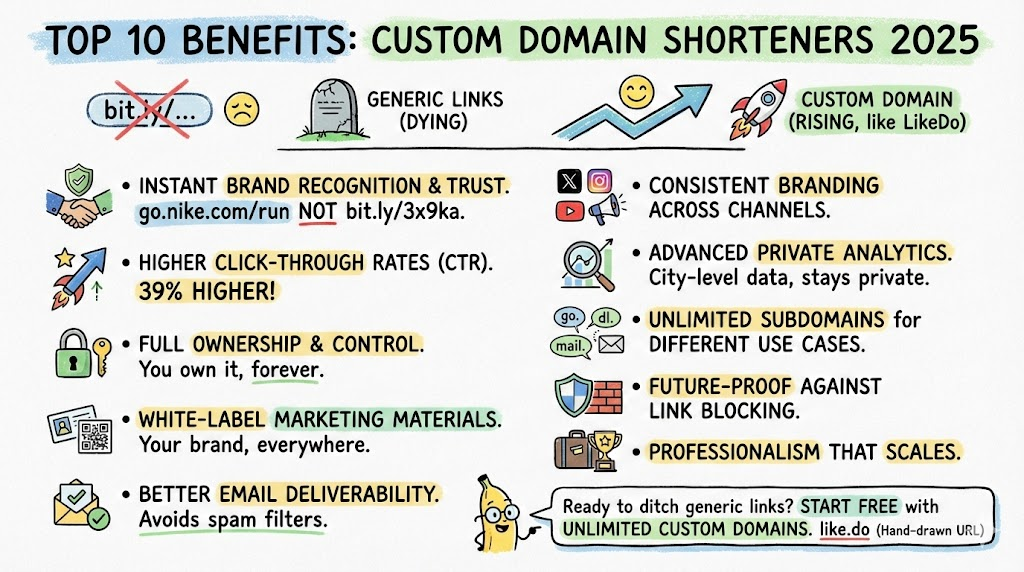
Top 10 Benefits of Using Custom Domain Shorteners in 2026
Why smart brands and developers are ditching generic short links like bit.ly or t.ly and moving to custom domain shorteners like LikeDo.
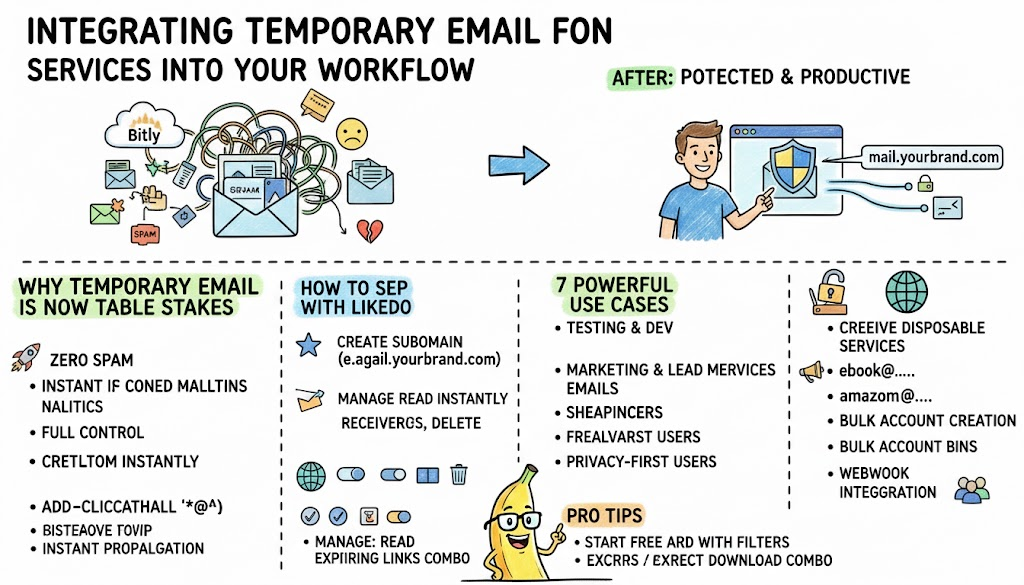
Integrating Email Services Into Your Workflow
Discover how developers, marketers, and privacy-conscious users are using custom-domain temporary email forwarding to stay productive while protecting their real inbox in 2026.
Link Analytics Complete Guide - Track, Measure, and Optimize Performance
Master link analytics with this comprehensive guide. Learn how to track clicks, analyze traffic sources, measure ROI, and optimize your marketing campaigns.
Newsletter
Join the community
Subscribe to our newsletter for the latest news and updates